
For four days, WeatherTech Raceway Laguna Seca became more than a racing circuit. It became a place where motorsport’s past returned with its sound, movement and emotion intact. Generations once separated by photographs, memories and archive footage were alive again, sharing the same paddock and racing beneath the same California sky.
The Rolex Monterey Motorsports Reunion brought hundreds of historic and period-correct racing cars back into competition, allowing machinery from vastly different generations to share the same paddock, climb the same hills and descend through the Corkscrew once again.
I arrived expecting to see an extraordinary collection of cars. What I experienced was something far more personal. These were cars I had read about, watched in old footage and admired from a distance, but hearing them start and watching them return to the circuit made their history immediate. There were moments when I stopped thinking about photographs and simply stood there, taking in what had returned.

The Reunion was not simply about rarity, value or nostalgia. It was about preserving the character of motorsport through movement. These cars were not positioned beneath carefully controlled museum lighting. They were being prepared, warmed, driven and worked on throughout the paddock. Their engines left heat in the air, their tires collected Laguna Seca’s dust, and their bodywork carried the evidence of being used as intended.
That was what made the event feel alive.
Inside This Story
Japanese motorsport · Thirteen racing groups · Beyond the racing line · Laguna Seca Auction · A circuit filled with memory
Japanese Motorsport Took Centre Stage
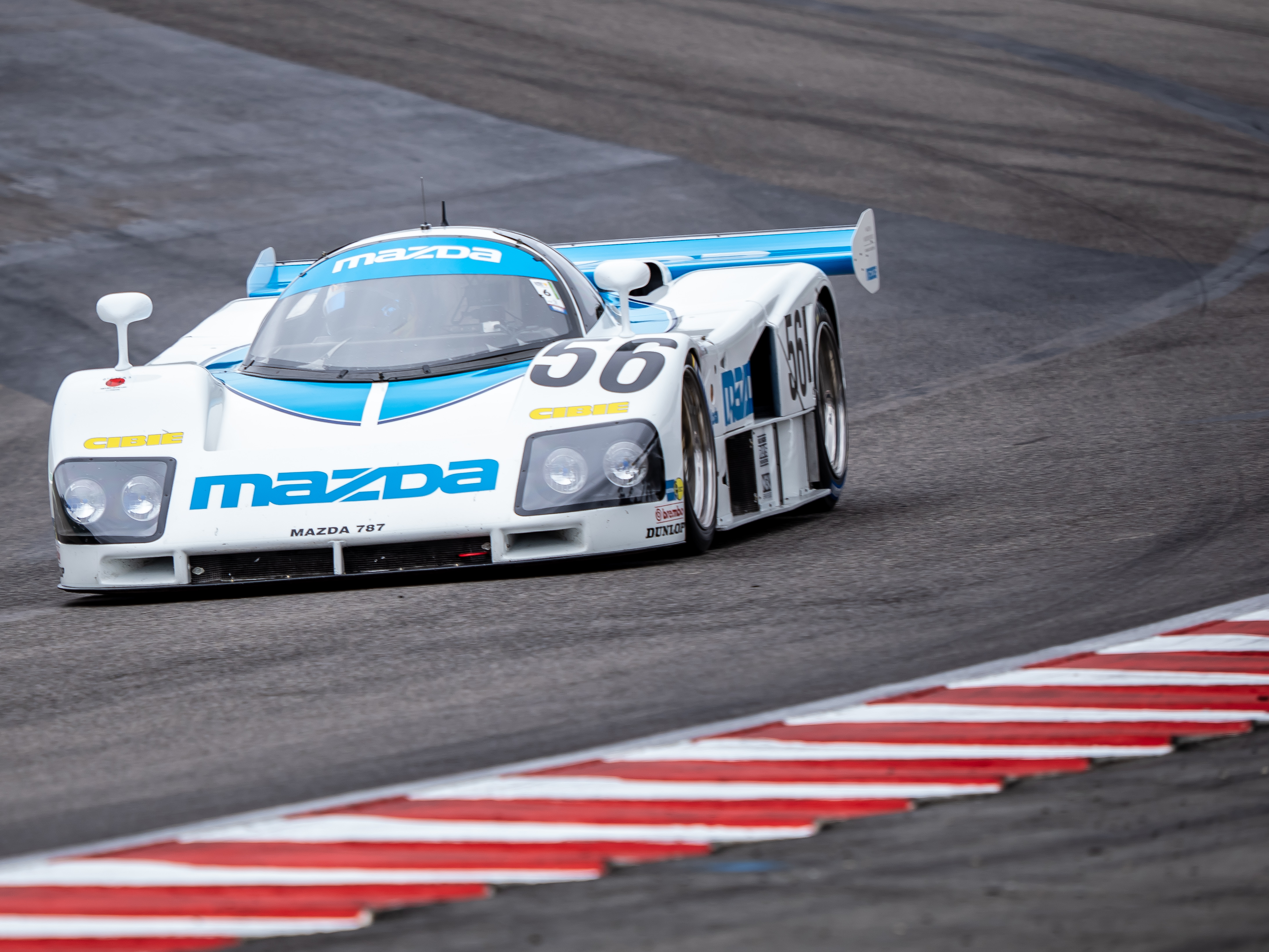
The 2026 Reunion honoured the icons of Japanese motorsport as its featured marque, bringing together machinery connected to Mazda, Toyota, Yamaha, Honda, Nissan, Acura and Subaru.
Japanese manufacturers have competed across almost every major form of motorsport, including Formula One, INDYCAR, endurance racing, touring cars, NASCAR, Formula E, rallying, drifting, off-road competition and motorcycle racing. At Laguna Seca, those different histories were brought together as parts of a much larger story.

What interested me most was the contrast between them, but there was also something deeply affecting about seeing those different chapters reunited. Each car carried the ambition of the engineers, drivers and teams who helped Japanese manufacturers earn their place in international motorsport. Together, they felt less like individual exhibits and more like generations of one story meeting again.

A rotary-powered Mazda did not sound or behave like a Honda-powered Formula One car. A historic Nissan touring car represented an entirely different philosophy from a modern Toyota endurance racer. Yet each reflected the engineering discipline, experimentation and determination that allowed Japanese manufacturers to establish themselves throughout international motorsport.
The dedicated Japanese car and motorcycle exhibitions allowed those differences to be seen and heard on the circuit. Away from the racing programme, the JDM Legends Car Show extended the celebration into road-car culture, bringing restored and modified Japanese builds into the wider event.
The result was not a single interpretation of Japanese automotive history. It was a broad view of how that history developed across circuits, stages, workshops and generations.

Thirteen Groups, One Continuous History
The Reunion’s 13 racing groups created a timeline stretching from the Pebble Beach road races of the early 1950s to international endurance machinery from the beginning of the 21st century.
Each group carried the name of a significant figure from motorsport history. Together, they showed how dramatically racing evolved while preserving the common purpose behind every car on the grid.
The Foundations of American Sports-Car Racing
The Del Monte Trophy brought together cars from the Pebble Beach road races held between 1950 and 1956.
These machines appeared delicate beside the wider and more aerodynamic cars that followed them. Their narrow tires, exposed cockpits and compact proportions belonged to a period when sports cars retained a close visual relationship with the road.
Watching them at Laguna Seca required a different appreciation of speed. Their performance could not be separated from the limitations of their brakes, suspension and tires. Every movement seemed more visible, and every correction from the driver carried greater significance. It was difficult not to think about those who first raced cars like these, often without the protection or technology later generations would take for granted. The drivers were different and the surroundings had changed, but the courage required to guide them quickly remained visible.


The John Morton Trophy continued that early production-car history with small-displacement SCCA machinery from the 1950s and 1960s. These cars did not possess the enormous power of the later groups, but their momentum and close competition gave them their own character.
The Ken Miles Trophy shifted the emphasis toward large-displacement SCCA production cars built between 1955 and 1967. Familiar road-going shapes arrived with a harder competition identity, combining substantial engines with technology that demanded commitment and mechanical sympathy from the drivers.
Together, these groups illustrated how much of American sports-car racing grew from relatively accessible production machinery before developing into increasingly specialized categories.
Formula Junior in Its Purest Form
The Peter Revson Trophy featured Formula Junior cars built between 1958 and 1963.
Lightweight, mechanically exposed and stripped of anything unnecessary, these cars represented an era in which simplicity was central to performance. Their narrow bodies and open wheels gave the driver nowhere to hide, either visually or dynamically.
They also provided a reminder that motorsport history is not defined only by its most powerful cars. Formula Junior played an important role in driver development, creating a path through which talent could be identified and refined.
At Laguna Seca, their lack of excess became their appeal.
International Sports Cars and the Pursuit of Speed
The Pedro Rodriguez Trophy brought together machinery from the 1961 through 1975 FIA Manufacturers Championship era.
These cars came from a transformative period in international sports-car racing. Aerodynamics became more sophisticated, speeds increased and manufacturer involvement helped produce some of endurance racing’s most recognisable shapes.
Standing beside them in the paddock, it was possible to appreciate the balance between engineering and form. Many appeared sculptural when stationary, yet every opening, curve and surface had been created around a competitive purpose.
Once they entered the circuit, that elegance became something more physical. The sound carried across the hills, while their movement through Laguna Seca revealed how much performance had advanced within a relatively short period.

Can-Am Without Restraint
Few groups announced their presence as forcefully as the Bruce McLaren Trophy.
The Can-Am and USRRC V8 cars from 1963 through 1974 represented a period in which engineers pursued performance with remarkably few restrictions. Wide bodywork, enormous tires and powerful engines gave the cars a visual and mechanical presence that remained unmistakable decades later.
I could often hear them long before I could see them.
Their engines filled the circuit with a deep, physical sound that seemed to move through the ground as much as through the air. At speed, their proportions began to make sense. The exaggerated bodywork and exposed mechanical purpose were not styling exercises. They were consequences of a championship built around extraordinary power and technical freedom.
Can-Am has become one of motorsport’s most romanticized periods, but seeing the cars in motion provided a clearer understanding of why. They were not subtle, and they were never intended to be.


Trans-Am and the Production-Car Identity
The Parnelli Jones Trans Am Trophy featured cars from the celebrated 1966 through 1972 period of the championship.
Mustangs, Camaros and their rivals retained enough of their production origins to remain immediately recognizable, but every stance, sound and movement reflected serious competition preparation. The connection to road-going machinery gave the group an accessibility that did not diminish its significance.
The Bob Sharp Cup continued that story with historic SCCA B and C sedans from 1966 through 1979.
This group offered variety rather than a single dominant shape or engine philosophy. Smaller sedans shared the circuit with cars developed around different manufacturers, layouts and approaches to performance. The racing demonstrated how production-based categories gave competitors room to extract speed from machinery that had not originally been designed solely for the circuit.
These cars carried familiar identities, but the way they moved through Laguna Seca belonged entirely to motorsport.


IMSA’s Defining Generations
Three of the most significant groups followed the evolution of North American sports-car racing.
The Peter Gregg Trophy covered IMSA GT, GTX, AAGT, GTU and related FIA machinery from 1973 through 1981. These cars occupied the space between recognisable production forms and increasingly specialized racing designs.
Their bodies became wider, their aerodynamics more purposeful and their mechanical preparation more sophisticated. Manufacturer identity remained visible, but the distance between the race car and its road-going counterpart was becoming increasingly clear.


The Hurley Haywood Trophy moved into the era of IMSA GTP and FIA Group C machinery from 1981 through 1991.
This was one of the defining groups of the Reunion, and one of its most emotional. These were not anonymous prototypes preserved only for their technical importance. They were connected to unmistakable liveries, distinctive sounds and memories shared across generations of endurance-racing supporters. For some, their return recalled races witnessed from grandstands and television screens. For others, it offered a first opportunity to experience machinery previously known only through photographs and stories.
GTP and Group C produced some of endurance racing’s most technically ambitious and visually distinctive prototypes. Their enclosed bodywork, ground-effect aerodynamics and manufacturer-backed development programmes created a generation of cars that still looks purposeful today.


The Mazda 787B belonged naturally within that history. Its rotary engine gave it a voice unlike anything else around it, cutting through the deeper tones of conventional piston engines. Hearing that sound travel across Laguna Seca felt like hearing a memory return. Seeing the car was not simply about recognising a Le Mans winner. It was about experiencing an engineering philosophy that remained entirely individual and understanding why it continues to hold such a powerful place in motorsport history.

The Scott Pruett Legends of Endurance Cup carried the story forward through IMSA, ALMS, Grand-Am and FIA machinery built between 1991 and 2011.
For many spectators, these were not cars known only through archive footage or books. They were the machines they remembered watching in period, their liveries and engine notes tied to weekends spent following endurance racing. Their return carried a different kind of nostalgia because those memories still felt close. Their presence connected the Reunion’s earliest history with a more recent era of sophisticated prototypes, highly developed GT cars and international endurance programmes, while making the passage of time impossible to ignore.
Together, the three groups showed how sports-car racing evolved without losing the visual and mechanical diversity that defined it.


Touring Cars at Their Most Aggressive
The Tommy Kendall Trophy featured GTO, GTU and Trans Am machinery from 1981 through 1991.
These cars retained traces of their production identities, but their proportions revealed how far the engineering had progressed. Wide arches, low bodywork and aggressive aerodynamic elements transformed familiar shapes into dedicated competition machines.
They also appeared physical to drive. Their movement under braking and acceleration remained visible, giving the cars a sense of weight and force that was different from the more aerodynamically refined prototypes.
The group represented touring-car racing at a point when manufacturers could stretch the identity of a road car almost beyond recognition without completely severing the connection.

The IROC Legacy
The Unser Family Cup brought together IROC machinery from 1973 through 2006.
The International Race of Champions was built around a direct idea: place leading competitors from different disciplines into comparable cars and reduce the influence of machinery on the result.
Seeing several generations of IROC cars together showed how that concept changed over time while remaining connected to the personalities who defined it. Drivers from stock cars, open-wheel racing, sports cars and other disciplines met within the same format, carrying different techniques into machinery intended to place the emphasis on the person behind the wheel.
The cars represented more than a former racing series. They recalled an era when leading drivers could step outside their established categories and compete directly against one another.


Beyond the Racing Line
The circuit provided the sound and movement, but the paddock gave the Reunion its depth.
I found some of the event’s most meaningful moments away from the racing line. Mechanics made final adjustments beneath open bodywork. Engines were warmed while tools remained carefully arranged nearby. Steering wheels showed years of use, and handwritten notes offered small reminders that even historically significant cars still required practical preparation.

Those details explained how the event was possible.
The cars survived because generations of owners, engineers, mechanics and drivers cared enough to accept responsibility for preserving them. Every repaired panel, rebuilt engine and carefully maintained component represented a decision that this history deserved to continue living. That preservation was active. It required specialist knowledge, replacement components, research and the willingness to operate machinery that could never be treated casually. Their work allowed those who remembered these cars to meet them again, while giving a new generation the opportunity to form memories of its own.
The Reunion did not present history as something finished. It showed history being maintained, and that was where the word “reunion” felt most appropriate. It described more than the return of the machinery. It described people reconnecting with parts of their own lives through the cars, teams, liveries and sounds they had never forgotten.

The Laguna Seca Auction
Bonhams|Cars held the inaugural Laguna Seca Auction during the Reunion, bringing a selection of rare road cars and significant competition machinery to the Lakebed area. I was unable to attend the auction, so it did not form part of my direct coverage. It remained a notable addition to the event, but my time stayed centred on the racing groups, the Japanese motorsport celebration and the stories developing throughout the paddock.
A Circuit Filled With Memory
What stayed with me after the Rolex Monterey Motorsports Reunion was not simply the number, rarity or value of the cars. It was the emotion created by seeing so many generations return to life together.
Each generation changed the atmosphere of Laguna Seca, but together they created something larger: a circuit in which decades no longer felt separated by time.
The early road-racing cars moved with delicacy. The production cars carried recognizable shapes into competition. The Can-Am machines filled the circuit with force, while the GTP and Group C prototypes demonstrated how advanced endurance racing had become. Japanese machinery added its own engineering language, from high-revving engines to turbocharging, hybrid technology and the unmistakable sound of Mazda’s rotary racing history.


Each group told a different story, but none existed in isolation.
Walking through the paddock allowed me to move between decades in a matter of minutes. A car from the Pebble Beach road races could sit within sight of an IMSA prototype developed half a century later. The engineering had changed almost beyond comparison, yet the purpose remained the same: to compete, to push forward and to leave something worth remembering.


There were moments throughout the weekend when the passing of time seemed to disappear. An engine would start, a familiar livery would emerge from the paddock or a car would climb toward the Corkscrew, and history no longer felt distant. It was present again, surrounded by people who understood what its return meant. That continuity is what makes the Reunion more than a historic racing event. It allows memories to be shared between generations, giving those who witnessed these cars in period the chance to experience them again while allowing others to hear, feel and understand them for the first time.
A racing car can be studied in a museum, but its complete identity only becomes clear when its engine starts. Sound, vibration, heat and movement reveal qualities that no specification sheet can fully communicate.
At Laguna Seca, the cars were allowed to speak for themselves.
For four days, motorsport’s past did not remain behind a barrier. It returned to the paddock, climbed toward the Corkscrew and raced through a landscape that has preserved so many memories of its own. This was more than machinery returning to a circuit. It was a reunion between the cars and the people who remembered them, and an introduction for those experiencing their history in motion for the first time.
History did not simply return.
It was felt again.


Article by Chloe Hedley
Photo Credits: All photography by James Hedley, except photographs 7, 9, and 10, which were taken by Chloe Hedley.
Continue with our Mazda 767B, 787 and 787B trackside story, Jenson Button’s Viper GTS-R and Reunion photography gallery. Explore the complete 2026 Monterey Reunion coverage.
Planning your own race-weekend coverage? Explore photography and editorial services for drivers, teams and sponsors →